
A few days ago, Firefox launched version 43, releasing the Windows x64 version alongside it. Facebook posts, Twitter, and other tech media have been broadcasting the news. Although nowadays I only open Firefox for web testing, usually sticking to Safari exclusive to the Mac OS X platform, this news still brought back some memories of Firefox.
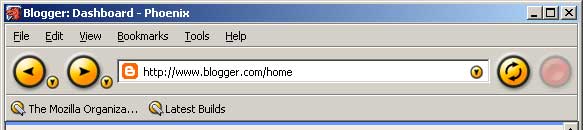
My experience using Firefox goes back a long way. Initially, Firefox wasn't even called Firefox; it was called Firebird (even earlier versions were Phoenix), and the version number was only 0.X. At that time, Microsoft's Internet Explorer still dominated the web browser market. In Taiwan, computers essentially only had a blue IE icon on the desktop, and the computer labs in elementary schools were naturally no exception. However, inexplicably, I still managed to come into contact with browsers other than IE XDDDD.
A group of people in the Ministry of Education had started trying to promote "free software" early on. I imagine one of the purposes of that promotion was an attempt to distance computer education from Microsoft Office, switching to free Office suites like OpenOffice to save on the expensive licensing costs from Microsoft. This initiative mysteriously trickled down to elementary schools, and thus I was exposed to the concept of free software. Honestly, as a kid, I mostly thought the interfaces of free software were shoddy and unappealing. Only Firebird kept me fiddling with it. Compared to IE, its ability to change themes deeply attracted my attention. An elementary school kid with nothing better to do just spent time changing themes and dressing up his Firebird XD.
Later, I gradually went online to search for relevant information. The MozTW website at the time had a complete narrative, roughly describing the love-hate relationship between Microsoft and Netscape, the past history of Netscape's development, and why the Mozilla Suite was developed. After reading that article, I even specifically downloaded Netscape and Mozilla to play around with. From an elementary school student's perspective, installing extensions, themes, customizing interfaces, and adjusting functions was enough to keep someone occupied for a whole day. Netscape had a Toy Factory theme back then; Factory was a classic, and Firefox also had a beautiful early theme called Orbit Yellow.

Looking back now, perhaps most of the knowledge I currently have about the Internet was laid down during that time? The relationship between web pages and browsers, the application of RSS bookmarks, and receiving emails (IMAP and POP3), because both Netscape and the complete Mozilla Suite package provided full suites of instant messaging (ICQ) and email clients, etc.
After transitioning from elementary to middle school, there was a time when I briefly gave up using Firefox. Aside from some basic themes, Firefox's functionality back then was still very incomplete, its speed hadn't clearly surpassed IE's, and pages often failed to render correctly on sites incompatible with Firefox. It wasn't until late middle school that I started using it again. By then, Firefox's momentum was gradually rising. On the one hand, IE security incidents were frequent; on the other hand, more and more people were promoting Firefox. During a high school IT club networking event, we even specifically invited someone from the Mozilla community to give a speech.
The perfection of extensions was also a factor. The classic extensions I loved using back then included mouse gestures FireGestures, Tab Mix Plus, and All-in-one sidebars. At that time, I would even specifically delve into some special tricks like modifying about:config settings and playing with Ramdisk. Thanks to Firefox's strong rise, I had more confidence recommending it to friends, and one of the reasons was the multitude of powerful extensions. There was also a very funny incident back then: a browser-based outer space strategy game was popular in class, and a good friend I recommended Firefox to told me a few days later that he found a Firefox extension to adjust the web game's interface XDDDD. (By the way, typing up to here brought back another memory: once I caught a glimpse of the Hell Girl anime, the browser in the computer lab was drawn as Firefox.)
However, after entering university, Chrome began to rise. Having had the Firefox experience, Chrome's extensions perfected at a much faster rate. Coupled with Google's strong backing and heavy promotion on the Google homepage, it spread much faster among the general non-IT public, and Firefox paled in comparison. In addition, the development resources Google invested were more abundant, so Firefox's performance was soon surpassed. But later, Firefox still adhered to its core philosophy and strove for development, expanding its business to mobile devices and seeking external collaborations. The latest news I saw later was a collaboration with Samsung to launch the Servo layout engine written in Rust in the future.
It has to be said that the booming internet today is partly because Firefox stepped out during that era to challenge Internet Explorer, stirring things up. Although the web browser landscape is now dominated by Chrome, Google's policies have made Chrome increasingly bloated (code shared with Chrome OS, too much data syncing running in the background), and Microsoft introduced Edge in the new Windows 10 operating system in an attempt to replace the original IE, though its functionality is still too rudimentary. Even though Firefox has faded from the public spotlight, as a pioneer of internet innovation, its every move still holds influence.