Catching Off Guard at the Turn of the Month
At the beginning of every month, when a resident physician rotates to a different department or ward, there is always a transition period. It takes time to familiarize oneself with the characteristics of different nursing stations, as well as the detailed disease progression of patients who have been staying longer, from the previous month to the current one.
Having just arrived at the 10C ward, before my seat was even warm, I was urgently paged by a nurse.
Doctor, the patient has been on Ceftazidime since last Friday, but is still having a fever right now! Do you want to take a look and prescribe any treatments?
The patient, Xiaohui (a pseudonym), had been hospitalized for over sixty days. She had terminal ovarian cancer with multiple metastases. Without time to carefully review all her weekly medical records since admission, I first learned from the diagnosis and handover information that she had a history of intra-abdominal infection (IAI) and urinary tract infection (UTI) during her stay. The Ceftazidime she was currently receiving was prescribed to treat the UTI.
At the bedside, I saw that Xiaohui looked very sick and a bit drowsy, and jaundice could be identified at the same time. However, a blood culture from three days ago happened to report the growth of E. coli at this time. So I wanted to wait for the antibiotic susceptibility report to determine which antibiotic to switch to.
Doctor, the susceptibility report is out. The E. coli from the peripheral blood culture looks very easy to kill; it is susceptible to Ceftazidime.
What on earth! If Ceftazidime could kill it, why was she still having a fever? Moreover, based on the patient's condition, it looked entirely like a fever driven by a bacterial infection. Looking at the fever curve record, there was indeed no fever on the first day after starting Ceftazidime, but it flared up again afterward. I could only guess that a new resistant bacterial infection had emerged, and the culture report from three days ago could not be fully trusted. I had to redo the entire fever workup and switch to a different empiric antibiotic. I chose Tazocin and started it directly.
Doctor, Xiaohui's consciousness is less drowsy, and she is no longer having a fever. Also, the urine culture report from last week is out, please take a look.
On the second day of Tazocin, Xiaohui's condition improved and the fever stopped. The urine culture report grew two strains of bacteria, both resistant to Ceftazidime. Well, no wonder it couldn't be suppressed. Cefepime could cover both, and with the attending physician's consent, we switched to it.
Up to this point, I was still glad that I had helped Xiaohui and done the right thing out of my duty as a physician. But...
Pleading Before the Sickbed
Doctor, I beg you, let me be free sooner, okay? Every day I wake up, I feel so, so cold. There is no one I know around me. It is truly lonely, you know...
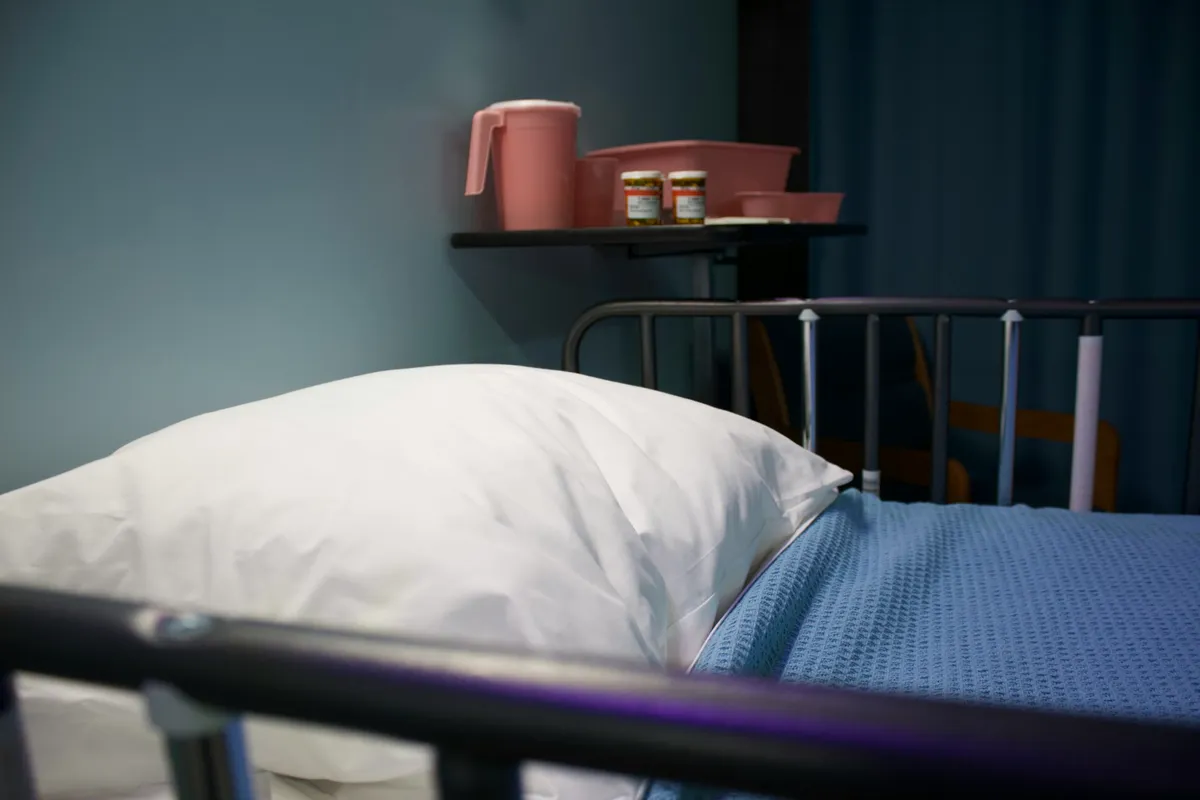
Before the sickbed, tightly holding the hands offered by the attending physician, Xiaohui pleaded weakly. I stood dejectedly behind the attending physician, gazing at the sorrow on the patient's face.
Outside the nursing station, the senior resident from the hospice team, the attending physician, and Xiaohui's mother discussed in low voices, deciding to invite Xiaohui's husband over to participate in the decision-making together. While waiting, I walked into the doctors' office with the attending physician to adjust Xiaohui's current medical orders.
If the family decides to respect Xiaohui's wishes, discontinue all antibiotics and nutritional IV fluids, and start Dormicum so that Xiaohui won't be in so much pain at the end of life.
Numbly recording the medical orders on the rounding list, and upon finishing the handover with the senior resident of the hospice team, the words stuck in my throat finally burst out as I was about to leave:
Teacher, was my aggressive management of the fever and switching of antibiotics a few days ago a mistake for Xiaohui?
No. In terms of respecting the patient's wishes, Xiaohui still wanted to survive at that time. This patient has been here for quite a while. Even though she knew it was terminal cancer with slim hope, she still begged us to save her when she first arrived.
Xiaohui had attachments to her family; her pair of children are not yet adults. But perhaps during her hospitalization, she was truly tormented for too long. Her infection worsened and improved, going back and forth, but the pain of cancer never ceased. Every time her condition deteriorated, I would think, if the patient just passed away like this, maybe it would be a release.
The Farewell at the End of Life
Pre-dying. This is the terminology used by the hospice team to communicate with each other, hoping to prepare early for a good death for the patient.
Meeting the people they need to meet; saying words of apology, gratitude, and love; reviewing their life; recalling and narrating past stories.
In other parts of the hospital, patients come and go, and the lifeline is maintained amidst the doctors' hurried busyness, laboratory tests, and the pulsation of heart rates, blood pressures, and oxygen saturations. But in the hospice ward, human hearts gather into thoughts, leaving a pure land for the patient to seek eternal rest beyond the emptiness of the secular world.
What is a physician's role in the hospice ward? Because of rotating departments every month, the establishment of relationships and spiritual support are far inferior to the long-term cultivation and deepening by the hospice team. When Xiaohui entered the pre-dying state and fell into a drowsy coma, I was stunned and regretful. Watching the vital signs curve slowly plummet, I felt for the first time that a physician's capabilities are so limited; at the end of life, we still have to bow our heads.
September 8, 2019. Having survived a busy on-call day with two beds of shock and one bed of hyperkalemia needing emergency dialysis. Late at night after the handover, right before getting off work, perhaps having a premonition that the time of parting was imminent, I returned to the hospice ward and quietly walked to the sickbed to take one last look at Xiaohui. Her family was peacefully accompanying her by her side as she slept. On the morning of September 9, Xiaohui's name could no longer be seen on the patient list in the electronic medical record system; only the application document for the death certificate remained on the desk.