Why Return?
Choosing Family Medicine again as an Intern, I hoped to have more opportunities than as a Clerk to apply what I have learned, interact with a diverse range of patients in the outpatient clinic, and practice my skills in taking medical histories and gathering information. Compared to my time as a Clerk, when I was still unfamiliar with much clinical knowledge, after a year of learning, I can feel that I have a more core philosophy, strategy, and direction during the initial patient interview, rather than asking questions blindly like a Clerk.
Video Teaching and Consultations
Through discussions with the attending physician and reviews of video teaching, I discovered that my current consultations still lean towards a student's textbook-oriented, goal-directed, mechanical questioning, lacking a sense of compassionate care for the patient's suffering. While following the teaching clinic, I also experienced how the attending physician seamlessly integrates the information they want to gather into casual conversation, slowly permeating care for the patient bit by bit, gradually breaking down the patient's defenses and guiding them to reveal more health-related information.
Additionally, although I have improved in history taking as an Intern compared to a Clerk, I am still lacking in subsequent patient education and treatment planning. However, I suppose these things cannot be achieved overnight in a short two weeks; they can only be slowly forged over a long, arduous medical career.
Patient Education Experience
Another area where interns fall short is experience. To give a memorable example, a 21-year-old female patient presented with meaningful symptoms during history taking, including weight loss (dropping 10kg in a month), loss of appetite, constipation, hand tremors, insomnia at night, palpitations, and increased sweating. Physical examination revealed an injected (inflamed) throat and slight goiter. Although the loss of appetite and constipation were uncharacteristic, based on the other symptoms, I still gave an impression of hyperthyroidism. However, the senior resident noticed that she had undergone a total thyroidectomy five years ago and had been continuously taking Thyroxine. Generally, it is rare for hyperthyroidism to reappear after being controlled with medication for so long, so post nasal drip could not be ruled out either. Such clinical reasoning is exactly what an intern may lack, and it is also what I hoped to learn by encountering different cases in a large hospital.
Paper Preparation and Presentation
While preparing for the Journal Meeting morning report, I was assigned a meta-analysis evaluating the efficacy of different NSAID medications in Knee and hip OA. Besides practicing how to critically appraise a meta-analysis (this was my first time encountering this type of study), I also began to learn how doctors apply and integrate experimental statistical results from research literature into their own treatment strategies. If my student days were just about learning basic knowledge from textbooks, the preparation for this morning report and the department head's sharing of experience during the presentation were precisely the training an intern needs to gradually step into the skills required for a medical career.
Home Care
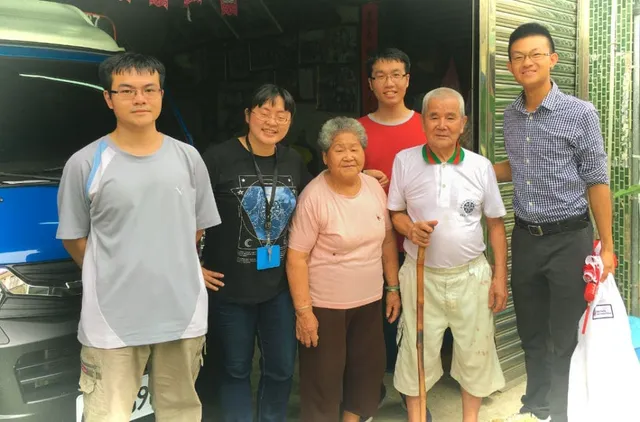
During our home care observation, we mainly followed the senior nurse to the homes of patients who applied for services due to disability and care needs to provide home care. The services included the placement and replacement of tubes, as well as evaluating basic respiratory status, bedbound condition, and bedsores. Occasionally, we also answered family members' questions about care. Although the applicants were mostly disabled elderly whose children were working and lacked caregiving manpower, there were also young and middle-aged adults who were disabled due to accidents. In addition to what we observed, the home care services available for application also included respite care and bathing services. Although the visiting nurses would try their best to ensure the hygiene of the tubes, they also mentioned that for bedbound disabled patients, the most frequently neglected aspect is actually oral hygiene. National Cheng Kung University Hospital has actually initiated a program to have a dentist accompany the visits, but due to a current shortage of manpower, only one physician is able to participate.
During the observation, I could not help but think: although every patient we visited received proper care, in a state of disability (unable to speak, unable to get up, brain-injured, or suffering from dementia), how much human dignity remains? Do we provide care out of respect for life, hoping that life can continue to the very end? Yet, amidst the struggling thrashing of a patient's limbs, looking into their dull, cloudy eyes, I could not reach the warmth of the soul imprisoned within. Could the patient have made a choice? Or do this disease, the system, and the ethical norms buried deep within society prevent the patient from choosing? Pressing on the patient's hand, I thought blankly: disability assessments, health insurance billing, and long-term care policies—whether it is grassroots medical practitioners or government public health policymakers—all are moving forward following the logic of a quantified world. This is how the giant wheel of this world operates. But... in this rationally structured world, is there any hope of doing more?
Initial consultation learning, video teaching, insulin injection education, and home care—these two weeks of internship in Family Medicine not only provided an opportunity to review my own consultation skills but also allowed me to see the different facets of Family Medicine.