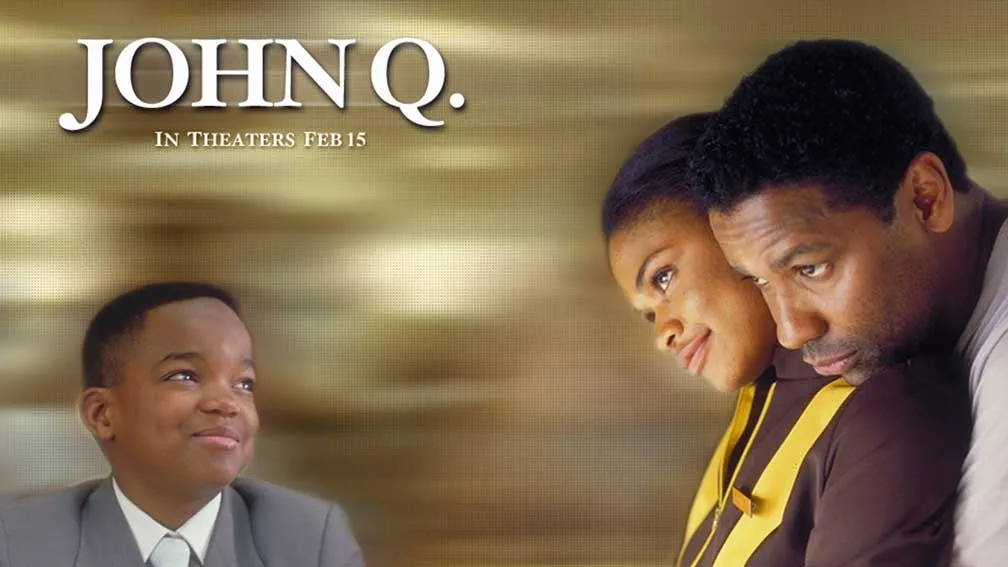
The original purpose of making this film was likely to indict the flaws and ugly side of the American social insurance system through the medical struggles of an ordinary, lower-middle-class family.
The opening features a horrifying car crash, subtly imbuing the film with a sense of urgency and tension. However, this is immediately followed by a portrayal of the everyday life of a very ordinary family: the TV in the living room, a mother preparing breakfast, an energetic child—everything is perfectly normal. Like anyone else, the parents argue over family finances; there are innocent childhood remarks accompanied by the adults' fond admonitions; and later, the whole family squeezes into the car, happily singing and playing games. Up to this point, the film presents the warmest picture of family bliss. But the director is likely using the audience's response to these scenes to infinitely amplify the shock of what comes next. Tragedy strikes. The child collapses during a baseball game and is subsequently diagnosed with a hole in his atrial septum at the hospital; his life could end at any moment. The hospital presents a life-saving but astronomically expensive surgery as the only option. Amidst tears of grief, the father resolves to do everything in his power to save his beloved son.
From here on, it is a continuous series of pleas and brick walls. I think the director was trying to show how easily a lower-class, blue-collar father with limited education can get lost in the complex and impersonal bureaucratic procedures of government agencies. Watching the father's exhausted and furious expression is truly heartbreaking. Is it really that difficult to get life-saving funds from a government that is supposed to serve its people? As the son's blood pressure drops like a grim countdown, and the hospital executives aggressively hound them for unpaid debts like reapers, the father grows cold inside, and so does the audience. Under the father's helpless, covered face, must an innocent child die due to a bloodsucking healthcare system controlled by money and a society that refuses to help?
Powerlessness is the theme the director uses as a match to ignite a barrel of gasoline in this desperate situation. "You always say you're going to handle it, but you never do!" The despairing mother delivers this harsh ultimatum to the father beside her dying son, and the pent-up anger explodes, leading to the hostage situation in the emergency room. Even though the hand holding the gun trembles, and his threats lack the expected fierce conviction, despair ultimately drives the usually mild-mannered father to violence. What kind of suppressed emotions led to this situation? I noticed the director not only planted foreshadowing earlier but also used the perspectives of bystanders during the hostage crisis (conversations between threatened but sympathetic medical staff and patients in the ER, the media reporting the news, and the dialogue between the police chief and hospital executives) to prompt reflection on what exactly drove this father to a dead end.
The most moving scene is perhaps when the father, seeing that even threatening patients' lives can't force the executives to yield, resolves to commit suicide, whispering his final words into his son's ear. Watching that scene, my eyes genuinely welled with tears, and my emotions surged. Even though an urgent, eleventh-hour rescue leads to a happy ending, that scene still lingers in my mind.
Emotion aside, after watching the movie, there are still some thoughts I want to record, and some points are truly worth discussing. American healthcare is not as good as Taiwan's, and modern medicine itself is an expensive industry. The price quoted by the hospital was probably accurate. But why couldn't the father raise that money during his pleas for help? To highlight the film's theme, the director specifically arranged a TV interview with the father's friend during the ER hostage situation, criticizing the profit-over-people ethos of American capitalism. But thinking critically and relating this to my future medical career (which also serves as a reflection on my current busy life), are all the people in the film who have the ability to save the child but choose not to truly just driven by money? I think the real reason for their cold responses is actually rooted in the capitalist system, which prioritizes income and expenses and demands work efficiency. In modern society, we require work to follow established procedures to achieve maximum output within working hours. This is why modern people are so easily overwhelmed by busyness. When we all carry certain burdens and have specific job responsibilities to fulfill, we subconsciously avoid requests that we know will bring us trouble. What does the hospital executive worry about? If she agrees, she will face endless demands for deferred payments in the future, as well as revenue pressure from the board of directors (which might jeopardize her job). What does the attending physician worry about? Does he struggle between earning a living in the future and the moral conscience of treating people for free? Can a doctor just focus on patient welfare without needing to make money? Why not just follow the established rules—doesn't it make life easier? Therefore, both people capable of saving the child chose to remain silent. The director may have some bias here, showing us only their glamorous exterior while omitting what they have lost under the pressure of daily, monotonous, high-stress work. I believe very few people are truly so cold-blooded and profit-driven that they would refuse to save a life, but most people submissively choose the most unburdened values and ways of coping with life. Dr. Lin said it well: we are full of passion now, but when we truly enter the medical field and become busy to a certain point, will we forget many things? Will many things become unclear? That's why these reflections must be kept.
So, after watching, what I pondered most wasn't how heartless Americans are, nor how bad the American healthcare system is, or how to improve Taiwan's healthcare system. Contradictions in society will always exist. The struggle between money and medical care during future practice (whether to treat a patient who has no money) is inevitable. Seeing the institutional issues in the medical field or the push for public health that requires someone to take charge, will I have the strength to overcome the physical instinct to take the easy way out and accomplish the many great things a healer is supposed to do? When exhausted from busyness and faced with moral judgments, will I still be able to make firm decisions? Or, standing alone, will I have the ability to appeal to and persuade the many people around me who are trapped in the thinking patterns of the executive and doctor in the film? I think this is the most practical lesson this film has given me.